My blog has moved!

You should be automatically redirected in 5 seconds. If not, visit
http://thegirlrevolution.com
and update your bookmarks.

Showing posts with label geena davis institute on gender in media. Show all posts

Monday, March 31, 2008

Empowering Girls: Princess Culture Examined

Ever wonder how and why the Disney Princess Culture distorted and minimized girlness, leaving girls as the extra character or one that desperately needs to be saved?

My film-maker friend, Aaron Lea, sent me this rejection letter to a Mary V. Ford from Disney dated 1938. It states that she should not bother sending her portfolio because the creative talent is, by company policy, men.

Which does help explain how the Disney Princess Girl Culture became so distructive and minimizing to girls.

Dear Miss Ford:

. . . .

Women do not do any of the creative work in connection with preparing the cartoons for the screen, as that work is performed entirely by young men. For this reason girls are not considered for the training school.

The only work open to women consists of tracing the characters on clear celluloid sheets with India ink and filling in the tracings on the reverse side with pain according to directions.

In order to apply for a position as "Inker" or "Painter" it is necessary that one appear at the Studio, bringing samples of pen and in and water color work. It would not be advisable to come to Hollywood with the above specifically in view, as there really are very few opeinings in comparison with the number of girls who apply.

Yours very truly,

Walt Disney Productions, LTD.


Aaron explained how during World War II Disney was put in a position, like most companies, to need women artists, which is how one of his creative idols was given some creative power. Here is a story on Mouseplanet about how women came to work at Disney.

"Mary Blair was an art supervisor and designer at Disney when they were at their highest level of brilliancy. Disney optioned to use her artwork for storybooks versions of certain films in place of stills, said Lea.

"Blair's influence can still be found today (she inspires a lot of us creative types). The opening credits for Monsters, Inc. is definitely an homage to her, as well as Foster's Home for Imaginary Friends," Lea pointed out.

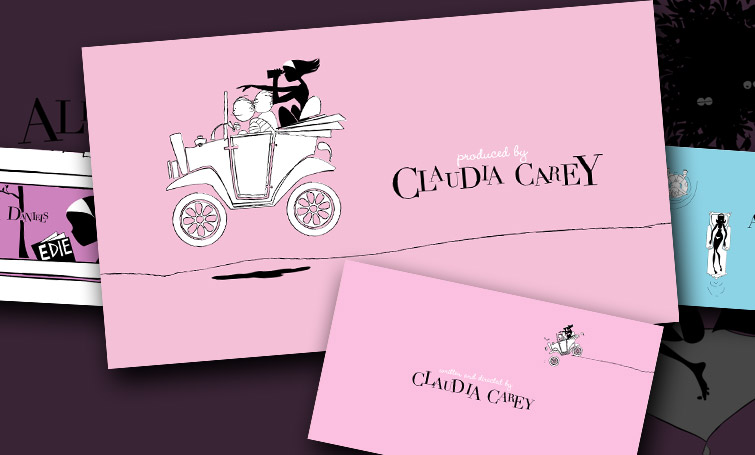
To illustrate Blair's influence Lea shares a sample of Blair's work and a sample of his own.
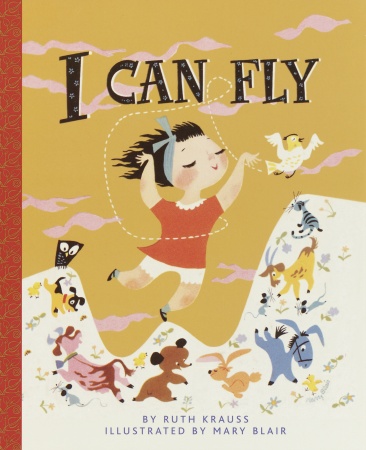
blair art.jpg I Can Fly illustration Mary Blair.

aaron pink carriage.jpgClaudia Carey illustration Aaron Lea.

There is an article In New York Entertainment examining whether things are that much different at Disney in 2008 than they were in 1938. "The IMDb credits for Disney's latest No. 1 movie, Ratatouille, list 26 separate animators — of whom exactly zero appear based on first names to be women," they cite. To check the fact, here is a link to the entire credits. Two female story participants were given the glorious titles of "additional story material," indicative of their involvement.

Over a rainy weekend my daughter and I rented Enchanted. Disney's newest version of it's own princess tales. Tune in tomorrow for analysis of Disney's new generation of Princess film.

The main premises of the Geena Davis Institute is that when there are more women involved in the creative process of film and television it results in more empowering girl characters.

What can YOU do to ensure more girls are included in children's media?

  • Make a video. The GDIGM has a YouTube project asking for people to get behind a camera and notify the film and media industry,

    I Want To See Jane! 

  • Donate money to the GDIGM so they can wine, dine and educate the film makers who do influence our daughters.
  • GDIGM is running a contest for girls. They invite all girls/women 13-26 to make a Video Ad citing the organizations research points. Someone has to win - why not your daughter? Go to the < site to learn more.

Cinderella Should Have Saved Her Self

Ariel - The Little Mute

Belle - Battered Codependent

Over a rainy weekend my daughter and I rented Enchanted. Disney's newest version of it's own princess tales. Tune in tomorrow for analysis of Disney's new generation of Princess film.
Image of Mary Ford's Disney rejection letter.

Wednesday, February 27, 2008

Girl Characters and Geena Davis


The Geena Davis Institute on Gender in Media works with entertainment creators and companies, educates the next generation of content-creators, and informs the public about the need to increase the number of girls and women in media aimed at kids and to reduce stereotyping of both males and females.

From the website: Three years ago, while watching children's television programs and videos with her then 2-year old daughter, Academy Award winner Geena Davis noticed a remarkable imbalance in the ratio of male to female characters. From that small starting point, Davis went on to raise funds for the largest research project ever undertaken on gender in children's entertainment (resulting in 4 discrete studies, including one on children's television).

The research showed that in the top-grossing G-rated films from 1990-2005, there were three male characters for every one female - a statistic that did not improve over time.

The concern was clear:

What message does this send to young children?

According to the study released this month: Not only were there fewer females, but the nature in which the females were depicted was questionable. They were either objectified and sexualized or portrayed as extremely traditional.

Dr. Smith and her team also examined 4000 female film characters and found that two types of females often frequent film: the traditional and the hypersexual. For example, females are over five times as likely as males to be shown in alluring apparel and are roughly three times as likely as males (10.6% vs. 3.4%) to be shown with an unrealistically “ideal” body.

The same problem was shown to exist in television aimed at audiences of children: Females in kids’ fare are almost four times as likely as males to be shown in sexy attire (20.7% vs. 5.4%) and nearly twice as likely as males to be shown with a small waist line (25.6% vs. 14.4%).

Animated females in TV for kids are more likely to be shown in sexually revealing attire than are live action females (24.5% vs. 17.4%). Also, females in animated TV stories for children are more likely to have small waists (36.9% vs. 6.9%) and have an unrealistic body shape (22.7% vs. 1.2%) than are females in live action TV stories for children.

Though, females are not the only ones hypersexualized in TV
content for children,
the report noted. Animated males are more likely than live action males to have a large chest (15.4% vs. 4.9%), small waist (18.4% vs. 4.3%), and an unrealistically muscularized physique (12.5% vs. .5%).

At the Institute's recent conference in January it was noted that such hypersexualization of children's characters contributes to low self esteem, poor body image and eating disorders in children.
For more detailed information you can read An Analysis of Popular Films and TV.

According to the report: In fact, research on television reveals that the participation of women writers and producers increases the percentage of females on screen.

What can You do? The Institute is having a contest called "I Want to See Jane!" The Geena Davis Institute on Gender in Media doesn't want any Jane to grow up believing she is only worthy of sidekick status. That's where our I Want to See Jane Campaign for girls and women comes in. YOU can be involved by spreading the word and telling your story, and your story could end up in the first GDIGM documentary!

It's easy! Just tape yourself talking about the female character who meant the most to you when you were growing up.

Showing posts with label geena davis institute on gender in media. Show all posts

Monday, March 31, 2008

Empowering Girls: Princess Culture Examined

Ever wonder how and why the Disney Princess Culture distorted and minimized girlness, leaving girls as the extra character or one that desperately needs to be saved?

My film-maker friend, Aaron Lea, sent me this rejection letter to a Mary V. Ford from Disney dated 1938. It states that she should not bother sending her portfolio because the creative talent is, by company policy, men.

Which does help explain how the Disney Princess Girl Culture became so distructive and minimizing to girls.

Dear Miss Ford:

. . . .

Women do not do any of the creative work in connection with preparing the cartoons for the screen, as that work is performed entirely by young men. For this reason girls are not considered for the training school.

The only work open to women consists of tracing the characters on clear celluloid sheets with India ink and filling in the tracings on the reverse side with pain according to directions.

In order to apply for a position as "Inker" or "Painter" it is necessary that one appear at the Studio, bringing samples of pen and in and water color work. It would not be advisable to come to Hollywood with the above specifically in view, as there really are very few opeinings in comparison with the number of girls who apply.

Yours very truly,

Walt Disney Productions, LTD.


Aaron explained how during World War II Disney was put in a position, like most companies, to need women artists, which is how one of his creative idols was given some creative power. Here is a story on Mouseplanet about how women came to work at Disney.

"Mary Blair was an art supervisor and designer at Disney when they were at their highest level of brilliancy. Disney optioned to use her artwork for storybooks versions of certain films in place of stills, said Lea.

"Blair's influence can still be found today (she inspires a lot of us creative types). The opening credits for Monsters, Inc. is definitely an homage to her, as well as Foster's Home for Imaginary Friends," Lea pointed out.

To illustrate Blair's influence Lea shares a sample of Blair's work and a sample of his own.
blair art.jpg I Can Fly illustration Mary Blair.

aaron pink carriage.jpgClaudia Carey illustration Aaron Lea.

There is an article In New York Entertainment examining whether things are that much different at Disney in 2008 than they were in 1938. "The IMDb credits for Disney's latest No. 1 movie, Ratatouille, list 26 separate animators — of whom exactly zero appear based on first names to be women," they cite. To check the fact, here is a link to the entire credits. Two female story participants were given the glorious titles of "additional story material," indicative of their involvement.

Over a rainy weekend my daughter and I rented Enchanted. Disney's newest version of it's own princess tales. Tune in tomorrow for analysis of Disney's new generation of Princess film.

The main premises of the Geena Davis Institute is that when there are more women involved in the creative process of film and television it results in more empowering girl characters.

What can YOU do to ensure more girls are included in children's media?

  • Make a video. The GDIGM has a YouTube project asking for people to get behind a camera and notify the film and media industry,

    I Want To See Jane! 

  • Donate money to the GDIGM so they can wine, dine and educate the film makers who do influence our daughters.
  • GDIGM is running a contest for girls. They invite all girls/women 13-26 to make a Video Ad citing the organizations research points. Someone has to win - why not your daughter? Go to the < site to learn more.

Cinderella Should Have Saved Her Self

Ariel - The Little Mute

Belle - Battered Codependent

Over a rainy weekend my daughter and I rented Enchanted. Disney's newest version of it's own princess tales. Tune in tomorrow for analysis of Disney's new generation of Princess film.
Image of Mary Ford's Disney rejection letter.

Wednesday, February 27, 2008

Girl Characters and Geena Davis


The Geena Davis Institute on Gender in Media works with entertainment creators and companies, educates the next generation of content-creators, and informs the public about the need to increase the number of girls and women in media aimed at kids and to reduce stereotyping of both males and females.

From the website: Three years ago, while watching children's television programs and videos with her then 2-year old daughter, Academy Award winner Geena Davis noticed a remarkable imbalance in the ratio of male to female characters. From that small starting point, Davis went on to raise funds for the largest research project ever undertaken on gender in children's entertainment (resulting in 4 discrete studies, including one on children's television).

The research showed that in the top-grossing G-rated films from 1990-2005, there were three male characters for every one female - a statistic that did not improve over time.

The concern was clear:

What message does this send to young children?

According to the study released this month: Not only were there fewer females, but the nature in which the females were depicted was questionable. They were either objectified and sexualized or portrayed as extremely traditional.

Dr. Smith and her team also examined 4000 female film characters and found that two types of females often frequent film: the traditional and the hypersexual. For example, females are over five times as likely as males to be shown in alluring apparel and are roughly three times as likely as males (10.6% vs. 3.4%) to be shown with an unrealistically “ideal” body.

The same problem was shown to exist in television aimed at audiences of children: Females in kids’ fare are almost four times as likely as males to be shown in sexy attire (20.7% vs. 5.4%) and nearly twice as likely as males to be shown with a small waist line (25.6% vs. 14.4%).

Animated females in TV for kids are more likely to be shown in sexually revealing attire than are live action females (24.5% vs. 17.4%). Also, females in animated TV stories for children are more likely to have small waists (36.9% vs. 6.9%) and have an unrealistic body shape (22.7% vs. 1.2%) than are females in live action TV stories for children.

Though, females are not the only ones hypersexualized in TV
content for children,
the report noted. Animated males are more likely than live action males to have a large chest (15.4% vs. 4.9%), small waist (18.4% vs. 4.3%), and an unrealistically muscularized physique (12.5% vs. .5%).

At the Institute's recent conference in January it was noted that such hypersexualization of children's characters contributes to low self esteem, poor body image and eating disorders in children.
For more detailed information you can read An Analysis of Popular Films and TV.

According to the report: In fact, research on television reveals that the participation of women writers and producers increases the percentage of females on screen.

What can You do? The Institute is having a contest called "I Want to See Jane!" The Geena Davis Institute on Gender in Media doesn't want any Jane to grow up believing she is only worthy of sidekick status. That's where our I Want to See Jane Campaign for girls and women comes in. YOU can be involved by spreading the word and telling your story, and your story could end up in the first GDIGM documentary!

It's easy! Just tape yourself talking about the female character who meant the most to you when you were growing up.