My blog has moved!

You should be automatically redirected in 5 seconds. If not, visit
http://thegirlrevolution.com
and update your bookmarks.

Showing posts with label womens issues. Show all posts

Monday, August 25, 2008

Superwoman Mom = Supergirl Perfection Pressure

DSC03997.JPG

by Tracee Sioux

Perfection - it's the pervasive modern-day feminine Achilles heel and we're passing it down to our daughters according to The Supergirl Dilemma a report about the pressure girls today are under.

Girls feel strong pressure to be perfect, look perfect and behave perfect all the time.

And I don't feel this is something we can blame on men. When was the last time you heard a man exclaim, I can't be perfect! I can't be everything to everyone all the time! Um, Never.

No, this is not an external problem - it's an internal feminine problem stemming from MOTHERS.

{{{{{Gasp}}}}} I said it.

To illustrate why I think so, here's two quick references to mother's preoccupation with perfection in our current feminine dialogue: Christine Fugate writes in the foreword of her new book, The Mothering Heights Manual for Motherhood Volume 1,
Over one hundred essays poured in from 26 states and four countries. Reading the essays shed light on the current state of the mom-mind. For example, the word 'perfect' (of a variation of it) was used over 92 times. That's almost one 'perfect' for every mom. While I think the questioning of perfection is positive (although not every essay questioned it), the frequency shows that the desire to be 'perfect' continues to loom over our sense of identity.

In The Feminine Mistake, Leslie Bennetts writes,
All too many American women are in thrall to increasingly deranged ideals of perfection. We live in a culture that constantly exhorts us to improve ourselves - and that assumes the perfectibility of virtually everything. If you don't like your nose, get a nose job! If you don't like the color of your hair, dye it! If your thighs are lumpy have liposuction! If you want abs of steel, go to the gym! Personal maintenance has become a national obsession that consumes a staggering amount of energy and resources; if American women put even a fraction of the time they spend on their appearance into working or social and political change, this country would be utterly transformed.

The Supergirl Dilemma, the report we discussed on Friday about gender stereotypes by Girls Inc., does not ignore the influence of adults in the girls' perceptions of what is important.

It's no surprise that the adult women - mothers and nonmothers included - answers to the questions mirrors the girls' answers to the questions.

True, People think that girls care a lot about shopping, 92% of the women said.

True, girls are under a lot of pressure to please everyone, 84% of the adult women said.

True, Girls are under a lot of pressure to dress the right way, 89% of the the adult women said.

What's fascinating is that women were much more likely than men to say they disliked that these stereotypes are true. Women are also more likely than the girls to say they disliked that these stereotypes are true - by a lot.

One reads the women's answers to the questions about girls and wonders if they aren't really answering what it was like for themselves as girls.

Perhaps because the women themselves are caving under the pressure of being perfect?

Our daughters emulate us, especially emotionally.

As in most reports about girls there's a lot of talk about media influence and pressure.

I'm definitely interested in helping Ainsley resist media pressure - but, who is helping her resist internalizing my feelings of being under pressure?

I'd like to see a report about how the media - television, marketing and advertising - is impacting mothers.

Are mothers figuring out how to deal with The Onslaught about women's bodies and sexuality, or are we internalizing it in an unhealthy way and then passing that onto our own daughters?

How are mothers going to resist media pressure that tells us we're never good enough?

If we can get right with ourselves, learn to accept our own selves in our imperfect states, and let this perfection pressure go, nothing will be able to hold our empowered daughters back.

If not. . . well, there's a lot of pressure to be perfect and I don't have to tell you how that feels - you already know.

Empowering Girls: Criticize Daughters' DNA

My Face/Her Face

Self-Loathing Sin Bank
Empowering Girls: Marketing Boundaries

APA Reports Sexualization of Girls Devastating

Math: It's A Tie

Monday, March 31, 2008

Empowering Girls: Princess Culture Examined

Ever wonder how and why the Disney Princess Culture distorted and minimized girlness, leaving girls as the extra character or one that desperately needs to be saved?

My film-maker friend, Aaron Lea, sent me this rejection letter to a Mary V. Ford from Disney dated 1938. It states that she should not bother sending her portfolio because the creative talent is, by company policy, men.

Which does help explain how the Disney Princess Girl Culture became so distructive and minimizing to girls.

Dear Miss Ford:

. . . .

Women do not do any of the creative work in connection with preparing the cartoons for the screen, as that work is performed entirely by young men. For this reason girls are not considered for the training school.

The only work open to women consists of tracing the characters on clear celluloid sheets with India ink and filling in the tracings on the reverse side with pain according to directions.

In order to apply for a position as "Inker" or "Painter" it is necessary that one appear at the Studio, bringing samples of pen and in and water color work. It would not be advisable to come to Hollywood with the above specifically in view, as there really are very few opeinings in comparison with the number of girls who apply.

Yours very truly,

Walt Disney Productions, LTD.


Aaron explained how during World War II Disney was put in a position, like most companies, to need women artists, which is how one of his creative idols was given some creative power. Here is a story on Mouseplanet about how women came to work at Disney.

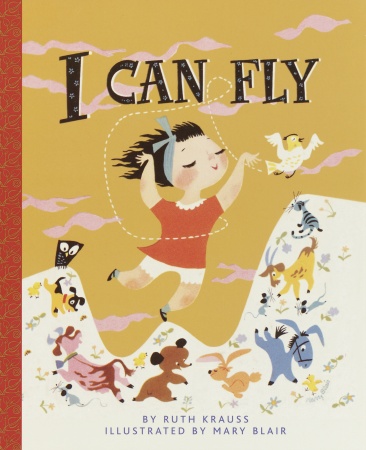
"Mary Blair was an art supervisor and designer at Disney when they were at their highest level of brilliancy. Disney optioned to use her artwork for storybooks versions of certain films in place of stills, said Lea.

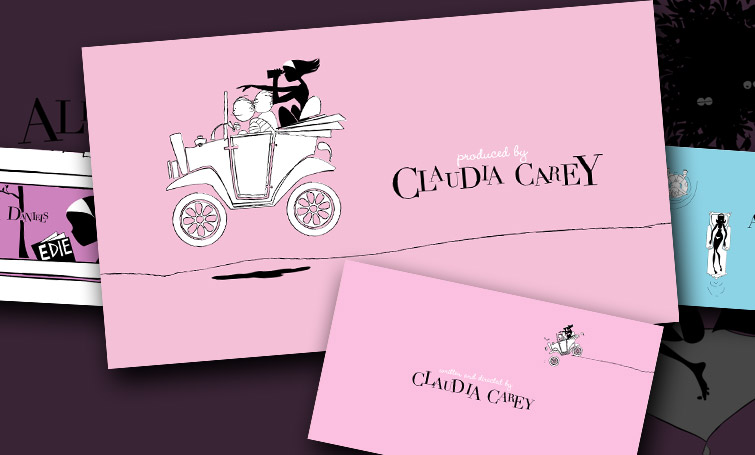
"Blair's influence can still be found today (she inspires a lot of us creative types). The opening credits for Monsters, Inc. is definitely an homage to her, as well as Foster's Home for Imaginary Friends," Lea pointed out.

To illustrate Blair's influence Lea shares a sample of Blair's work and a sample of his own.
blair art.jpg I Can Fly illustration Mary Blair.

aaron pink carriage.jpgClaudia Carey illustration Aaron Lea.

There is an article In New York Entertainment examining whether things are that much different at Disney in 2008 than they were in 1938. "The IMDb credits for Disney's latest No. 1 movie, Ratatouille, list 26 separate animators — of whom exactly zero appear based on first names to be women," they cite. To check the fact, here is a link to the entire credits. Two female story participants were given the glorious titles of "additional story material," indicative of their involvement.

Over a rainy weekend my daughter and I rented Enchanted. Disney's newest version of it's own princess tales. Tune in tomorrow for analysis of Disney's new generation of Princess film.

The main premises of the Geena Davis Institute is that when there are more women involved in the creative process of film and television it results in more empowering girl characters.

What can YOU do to ensure more girls are included in children's media?

  • Make a video. The GDIGM has a YouTube project asking for people to get behind a camera and notify the film and media industry,

    I Want To See Jane! 

  • Donate money to the GDIGM so they can wine, dine and educate the film makers who do influence our daughters.
  • GDIGM is running a contest for girls. They invite all girls/women 13-26 to make a Video Ad citing the organizations research points. Someone has to win - why not your daughter? Go to the < site to learn more.

Cinderella Should Have Saved Her Self

Ariel - The Little Mute

Belle - Battered Codependent

Over a rainy weekend my daughter and I rented Enchanted. Disney's newest version of it's own princess tales. Tune in tomorrow for analysis of Disney's new generation of Princess film.
Image of Mary Ford's Disney rejection letter.

Tuesday, May 29, 2007

Domestic Labor Balance

By Tracee Sioux

We had a fabulous time over Memorial Day weekend when a very generous friend offered to let us stay at her bed and breakfast for three days. It was super-glorious. We were so grateful we couldn’t help inviting a few friends over to share it and made it a lovely party. It got me to thinking about who does the domestic or social labor, men or women?

When my extended family socializes or have parties it is literally exhausting hard labor for the women. My grandmother, aunts and mom will cook for days. They are the last to sit down and when the eating is over the women are the ones to clean up. As a child I just accepted this as a matter of course. The women did the work in the home.

As an adult, however, I am one of the women expected to work my butt off. As an adult I’ve come to realize how exhausting putting on Sunday dinner is. It’s a day of rest for the men, but a day of hard labor for the women. As a little girl everyone in our family had to clear their own plates from the table, except my father, he was treated as a pampered prince because he was the man and “brought home the money,” my mother would explain. Well, women are bringing home much of the money in today’s society, but we’re still doing more than our share of the domestic labor.

I don’t resent the work to create a hospitable party. I resent the men sitting there taking it for granted that it’s the woman’s job. I can’t change my extended family, but I’m straight up with my daughter that it’s the wrong attitude and it’s unfair.

When I throw a party or get ready for company my husband pitches in. He is expected to help me clean for company, prepare the food and to clean up after the party. Why shouldn’t he really?

I think we're in a a girl revolution and we, their parents, are the transition generation. It’s not too easy to convince my 50-year-old uncle that it’s his job to clean up after dinner as much as it is mine. However, my daughter can see that I expect my husband to help in the same social situations. This way, by the time she’s grown up she’ll know that it’s within her rights to expect her husband to help with the domestic chores.
Showing posts with label womens issues. Show all posts

Monday, August 25, 2008

Superwoman Mom = Supergirl Perfection Pressure

DSC03997.JPG

by Tracee Sioux

Perfection - it's the pervasive modern-day feminine Achilles heel and we're passing it down to our daughters according to The Supergirl Dilemma a report about the pressure girls today are under.

Girls feel strong pressure to be perfect, look perfect and behave perfect all the time.

And I don't feel this is something we can blame on men. When was the last time you heard a man exclaim, I can't be perfect! I can't be everything to everyone all the time! Um, Never.

No, this is not an external problem - it's an internal feminine problem stemming from MOTHERS.

{{{{{Gasp}}}}} I said it.

To illustrate why I think so, here's two quick references to mother's preoccupation with perfection in our current feminine dialogue: Christine Fugate writes in the foreword of her new book, The Mothering Heights Manual for Motherhood Volume 1,
Over one hundred essays poured in from 26 states and four countries. Reading the essays shed light on the current state of the mom-mind. For example, the word 'perfect' (of a variation of it) was used over 92 times. That's almost one 'perfect' for every mom. While I think the questioning of perfection is positive (although not every essay questioned it), the frequency shows that the desire to be 'perfect' continues to loom over our sense of identity.

In The Feminine Mistake, Leslie Bennetts writes,
All too many American women are in thrall to increasingly deranged ideals of perfection. We live in a culture that constantly exhorts us to improve ourselves - and that assumes the perfectibility of virtually everything. If you don't like your nose, get a nose job! If you don't like the color of your hair, dye it! If your thighs are lumpy have liposuction! If you want abs of steel, go to the gym! Personal maintenance has become a national obsession that consumes a staggering amount of energy and resources; if American women put even a fraction of the time they spend on their appearance into working or social and political change, this country would be utterly transformed.

The Supergirl Dilemma, the report we discussed on Friday about gender stereotypes by Girls Inc., does not ignore the influence of adults in the girls' perceptions of what is important.

It's no surprise that the adult women - mothers and nonmothers included - answers to the questions mirrors the girls' answers to the questions.

True, People think that girls care a lot about shopping, 92% of the women said.

True, girls are under a lot of pressure to please everyone, 84% of the adult women said.

True, Girls are under a lot of pressure to dress the right way, 89% of the the adult women said.

What's fascinating is that women were much more likely than men to say they disliked that these stereotypes are true. Women are also more likely than the girls to say they disliked that these stereotypes are true - by a lot.

One reads the women's answers to the questions about girls and wonders if they aren't really answering what it was like for themselves as girls.

Perhaps because the women themselves are caving under the pressure of being perfect?

Our daughters emulate us, especially emotionally.

As in most reports about girls there's a lot of talk about media influence and pressure.

I'm definitely interested in helping Ainsley resist media pressure - but, who is helping her resist internalizing my feelings of being under pressure?

I'd like to see a report about how the media - television, marketing and advertising - is impacting mothers.

Are mothers figuring out how to deal with The Onslaught about women's bodies and sexuality, or are we internalizing it in an unhealthy way and then passing that onto our own daughters?

How are mothers going to resist media pressure that tells us we're never good enough?

If we can get right with ourselves, learn to accept our own selves in our imperfect states, and let this perfection pressure go, nothing will be able to hold our empowered daughters back.

If not. . . well, there's a lot of pressure to be perfect and I don't have to tell you how that feels - you already know.

Empowering Girls: Criticize Daughters' DNA

My Face/Her Face

Self-Loathing Sin Bank
Empowering Girls: Marketing Boundaries

APA Reports Sexualization of Girls Devastating

Math: It's A Tie

Monday, March 31, 2008

Empowering Girls: Princess Culture Examined

Ever wonder how and why the Disney Princess Culture distorted and minimized girlness, leaving girls as the extra character or one that desperately needs to be saved?

My film-maker friend, Aaron Lea, sent me this rejection letter to a Mary V. Ford from Disney dated 1938. It states that she should not bother sending her portfolio because the creative talent is, by company policy, men.

Which does help explain how the Disney Princess Girl Culture became so distructive and minimizing to girls.

Dear Miss Ford:

. . . .

Women do not do any of the creative work in connection with preparing the cartoons for the screen, as that work is performed entirely by young men. For this reason girls are not considered for the training school.

The only work open to women consists of tracing the characters on clear celluloid sheets with India ink and filling in the tracings on the reverse side with pain according to directions.

In order to apply for a position as "Inker" or "Painter" it is necessary that one appear at the Studio, bringing samples of pen and in and water color work. It would not be advisable to come to Hollywood with the above specifically in view, as there really are very few opeinings in comparison with the number of girls who apply.

Yours very truly,

Walt Disney Productions, LTD.


Aaron explained how during World War II Disney was put in a position, like most companies, to need women artists, which is how one of his creative idols was given some creative power. Here is a story on Mouseplanet about how women came to work at Disney.

"Mary Blair was an art supervisor and designer at Disney when they were at their highest level of brilliancy. Disney optioned to use her artwork for storybooks versions of certain films in place of stills, said Lea.

"Blair's influence can still be found today (she inspires a lot of us creative types). The opening credits for Monsters, Inc. is definitely an homage to her, as well as Foster's Home for Imaginary Friends," Lea pointed out.

To illustrate Blair's influence Lea shares a sample of Blair's work and a sample of his own.
blair art.jpg I Can Fly illustration Mary Blair.

aaron pink carriage.jpgClaudia Carey illustration Aaron Lea.

There is an article In New York Entertainment examining whether things are that much different at Disney in 2008 than they were in 1938. "The IMDb credits for Disney's latest No. 1 movie, Ratatouille, list 26 separate animators — of whom exactly zero appear based on first names to be women," they cite. To check the fact, here is a link to the entire credits. Two female story participants were given the glorious titles of "additional story material," indicative of their involvement.

Over a rainy weekend my daughter and I rented Enchanted. Disney's newest version of it's own princess tales. Tune in tomorrow for analysis of Disney's new generation of Princess film.

The main premises of the Geena Davis Institute is that when there are more women involved in the creative process of film and television it results in more empowering girl characters.

What can YOU do to ensure more girls are included in children's media?

  • Make a video. The GDIGM has a YouTube project asking for people to get behind a camera and notify the film and media industry,

    I Want To See Jane! 

  • Donate money to the GDIGM so they can wine, dine and educate the film makers who do influence our daughters.
  • GDIGM is running a contest for girls. They invite all girls/women 13-26 to make a Video Ad citing the organizations research points. Someone has to win - why not your daughter? Go to the < site to learn more.

Cinderella Should Have Saved Her Self

Ariel - The Little Mute

Belle - Battered Codependent

Over a rainy weekend my daughter and I rented Enchanted. Disney's newest version of it's own princess tales. Tune in tomorrow for analysis of Disney's new generation of Princess film.
Image of Mary Ford's Disney rejection letter.

Tuesday, May 29, 2007

Domestic Labor Balance

By Tracee Sioux

We had a fabulous time over Memorial Day weekend when a very generous friend offered to let us stay at her bed and breakfast for three days. It was super-glorious. We were so grateful we couldn’t help inviting a few friends over to share it and made it a lovely party. It got me to thinking about who does the domestic or social labor, men or women?

When my extended family socializes or have parties it is literally exhausting hard labor for the women. My grandmother, aunts and mom will cook for days. They are the last to sit down and when the eating is over the women are the ones to clean up. As a child I just accepted this as a matter of course. The women did the work in the home.

As an adult, however, I am one of the women expected to work my butt off. As an adult I’ve come to realize how exhausting putting on Sunday dinner is. It’s a day of rest for the men, but a day of hard labor for the women. As a little girl everyone in our family had to clear their own plates from the table, except my father, he was treated as a pampered prince because he was the man and “brought home the money,” my mother would explain. Well, women are bringing home much of the money in today’s society, but we’re still doing more than our share of the domestic labor.

I don’t resent the work to create a hospitable party. I resent the men sitting there taking it for granted that it’s the woman’s job. I can’t change my extended family, but I’m straight up with my daughter that it’s the wrong attitude and it’s unfair.

When I throw a party or get ready for company my husband pitches in. He is expected to help me clean for company, prepare the food and to clean up after the party. Why shouldn’t he really?

I think we're in a a girl revolution and we, their parents, are the transition generation. It’s not too easy to convince my 50-year-old uncle that it’s his job to clean up after dinner as much as it is mine. However, my daughter can see that I expect my husband to help in the same social situations. This way, by the time she’s grown up she’ll know that it’s within her rights to expect her husband to help with the domestic chores.