We have the power to - not just passively ban negative media, which we should definitely do - But we have the power to CREATE positive media for our daughters about girls.
I can tell you this - my daughter thinks it's pretty cool that she's the Poster Girl for Empowering Girls: So Sioux Me. This is one of the reasons I'm inviting you to send photos of your daughter to be included as a Poster Girl on this site. It is one way to take media from outside of our world to a creative and positive medium that includes them.
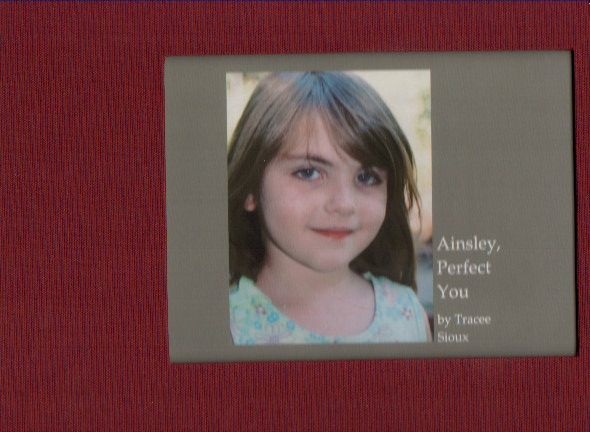
I created a children's book for my daughter's 5th birthday titled Ainsley, Perfect You.I am practically begging you to STEAL this idea for Christmas (or birthdays).
We read this book before the First Day of School, whenever Ainsley makes negative comments about her self, whenever she feels insecure or whenever she wants. It's a special book that sits out on a shelf and we must wash our hands before reading it.
In the book I addressed issues of beauty, because Ainsley seemed preoccupied with what it was and exactly what criteria people were using to make the judgement about who was beautiful. I addressed school, education, intelligence and learning. I addressed self-worth and a feeling of wholeness and "enoughness." I addressed the meaning of God and her role as a Child of God. I addressed risk-taking and trying new things.
Your family may prize different characteristics or place different values as a priority. What's important, is that you can use this tool to teach her who she is, but also influence, mold and raise or define the bar of expectation for who she will become.
A-N-Y-O-N-E can do this if they have a computer, a camera, $30 and an imagination. You may be thinking you're short on imagination so, while Ainsley, Perfect You is copyrighted I give you permission to steal ideas, concepts, words, etc. Your daughter is every bit as cool as mine, but she may have different attributes and characteristics.
I encourage you to use my book for ideas, but personalize them for your daughter(s). (Of course, its good for your daughter, but don't forget your sons.)
I used www.MyPublisher.com because they were the only company who had a "storybook" feature at the time. Turns out my parents and grandparents were also interested in having a copy of this book (one project many gifts!) and My Publisher has coupons they'll send you frequently. Flickr now offers the feature, and Snapfish and probably all the other ones too.
There are 20 pages so I'll run Ainsley, Perfect You as a series, starting with this foreword. I had to scan the pages, so please forgive the quality.
One particular exhibit had a disconcerting effect on me for days.
You sit in between two mirrors and look at your self.
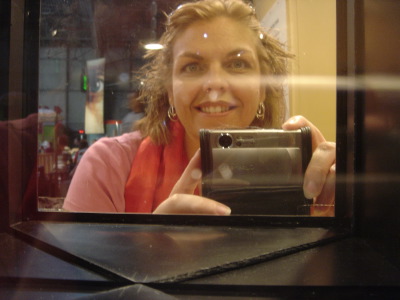
One is a regular mirror and show's you how you see yourself every day. The top photo is how I see myself.
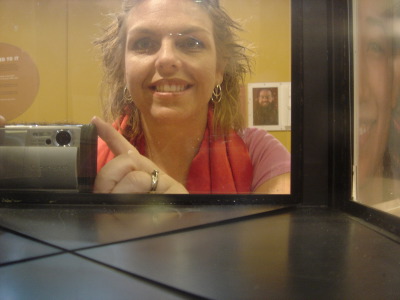
The other shows you what other people see every day. It shows you what you really look like.
Do you see a minute difference between the top photo and the bottom photo?
I've been fascinated by my own emotional reaction. Truly, it was unsettling to see my reflection differently than I do everyday.
The top photo, what I see in the mirror is more attractive to me.
My eyes are uneven in the second photo. The right eye, when looking at it, is slightly lower than the left one.
I find I hold my head slightly tilted in a way that makes my features more even. I think I also hold that eyebrow higher to make the eyes look more symmetrical. I compensate for the flaw I've really only noticed once in a photo when I was pregnant with Zack.
Since you are other people and it's not your face I really have no clue how you are perceiving the attractiveness of the two photos or whether you see the unevenness of my eyes at all. For all I know, everyone who sees me, may choose to make the same correction that I do for myself.
It strikes me as a kindness to myself that my subconscious mind chooses to correct my minor flaw so that I not only feel more attractive, but literally see myself as more attractive.
It also strikes me that people who suffer from eating disorders, like anorexia and bulimia or the emotional disorder of body dysmorphia for some reason they aren't subconsciously fixing their features in their minds.
They are not only seeing their minor flaw - they are focusing on it and magnifying it.
Its also likely they are expecting the outside world, other people, to treat them the way they treat themselves. Did you see how I assumed that others would treat me with the same kindness as I show myself and that others would correct or overlook the minor flaw in their own perceptions, rather than focus on it and magnify it? This assumption is likely a result of my habit of doing such a kindness for myself and for others.
Were I unkind to myself, and if I made a habit of focusing on the minor flaws of other people, I would likely assume that others were also doing so to me.
That's my theory anyway, based on everything I've read about self-esteem, self-worth, and eating disorders and related emotional disorders.
It follows then that maybe we can teach our daughters to serve their own mental health and self-esteem.
Cutting ourselves, our daughters and others some slack for our minor physical flaws teaches, by example, our daughters this emotional skill vital to their self-preservation.
Treating ourselves, our daughters, and others - especially other girls and women - with kindness is also a teachable habit.
Self-love and self-acceptance is a skill. One we learn and one we can teach.
Kathleen Deveny has a great article in Newsweek titled In Praise of Bossy Girls, about how we hear girls, but never boys, called Bossy when they take charge.
We ask girls to walk a fine line between being strong and being likable. It's a line we typically allow boys to trample.
What's next?
Well, you KNOW what's next, because it's either happened to you or you've used all your powers of "nice" to avoid it.
As little girls they call us bossy. As women they call us BITCHY.
Praise your bossy daughter today! She's showing signs of being a leader.
You better be positive he's a prince before you marry him, Ainsley. I can't tell you how many women I know who married a toad and found out he was incapable of being anything other than a toad.
(If you're not very careful you can marry a toad and he'll turn into an ass.)
I'll save this sage bit of wisdom for when I'm allowed to say "ass" in her presence.
Disney's princess tales all attempt to answer one question: What do girls/women want? According to Disney's traditional message to little girls, what women want is to be saved by a prince, fall instantly in love and live happily ever after.
As a woman, and a parent, I've been waiting for Disney to come into the new millennium with a more up-to-date, girl-friendly, version of it's own princess drama. Shrek was great, but it lacked the Disney Magic that makes little girls drool.
Enchanted does question the Disney Princess Culture, kinda. Sorta. Maybe.
The evil stepmother still finds the princess threatening and attempts to do away with her by sending her to New York City "where dreams never come true."
The Princess Giselle, meets a single father, about to become engaged to the exact opposite of a Disney Princess archetype, Nancy. Nancy is a professional single woman, who acknowledges that she's never had much use for Prince Charming, but she is holding out for a decent guy. She's accused of being a secret hopeless romantic underneath her practical exterior by a coworker. The accusation proves true when she gets exhilarated by an uncharacteristic invitation to a ball and nearly swoons over a gift of real flowers instead of the usual e-card.
Our single father, Robert, is a divorce lawyer, who was left by the mother of his child, a daughter for whom, he buys books like Great Women in History instead of the princess book she really wants. Disney pokes a little fun at parents, like myself, who take issue with the Princess Save Me Culture and wish to present our daughters with a more realistic expectation for their futures. They highlight Madam Curie and point out that she died of radiation poisoning - which isn't as much fun or as magical a story as living happily ever after. Touche' Disney. My daughter wholeheartedly agrees. But, is it really more romantic to give up your voice to get a man? Or to fall in love with and change your kidnapper?
"Oh, you can try to withhold Princess Culture all you like," Disney seems to challenge, as they have the six-year-old girl jump out of a taxi and chase down our Princes Giselle as she mistakenly tries to enter a billboard in the shape of a castle. She falls right into the arms of our unprincely hero, Robert. He, of course, agrees to help her, but not to save her, much too his daughter's chagrin. Very much like the disappointment I'm sure my own daughter feels when I tell her to pick a movie other than Cinderella or Sleeping Beauty at the video store.
Princess Giselle behaves as a caricature of her own princess self. Basically, she is full of larger than life false hand movements and emotional twittering and says unbelievably ridiculous things about being saved and the power of true love's kiss. She's incapable of any emotion aside from happiness and joy and goodness. She's naive to the point of being deranged. To its credit Disney dares to poke as much fun as it's own history and creation of the idiotic lunacy of Princess Culture as it pokes at me for being less than charmed by it.
A shift in Princes Giselle occurs when she and her non-prince savior, Robert, set against the backdrop of street theater in Central Park, begin to discuss dating versus falling-in-love-at-first-sight and what happens after happily ever after. Seems our Princess was previously unaware that she might have job after marriage and that might be part of what makes her happy. Or that she might express her thoughts, dreams and desires to her love-at-first sight Prince fiance should he show up to save her.
For his part our non-princess-saving man realizes that it certainly won't kill him to offer up a little romance to show his practical modern-day woman Nancy that he loves her. (No, I think, it certainly won't kill you to go to a little effort. Maybe I'll send this particular YouTube Video to my own modern-day practical man. Hint, hint.)
Giselle experiences anger for the first time when Robert confronts her with the reality that her Prince probably isn't coming and it's time for Plan B. Plan B, in Princess Culture lingo is, I believe, a job or a sense of purpose. Our naive Princess Giselle is seen flipping through Great Women of History with a new interest.
Of course, this is a Disney film so our Prince, like many Princes of Romance Past, does arrive to save our Princess. And our Prince, like many Princes of Romance Past is a completely self-absorbed dope. Cute, but lacking substance. (Who doesn't remember that guy? Luckily, ladies, we skirted that future - by going on a date - before it was too late.)
In light of her own personal awakening our Princess Giselle demands a date before they return to never, never land where she realizes maybe her love-at-first-sight Prince and she don't really have all that much in common. Maybe, she's making a terrible mistake? Maybe she loves the man who doesn't want to save her, but who took the time to ask her what she wanted to be when she grows up? Maybe?
The film takes a detour worth looking at. Giselle decides she needs a ball gown and our six-year-old girl snags Daddy's emergency credit card, with a quip about this being an emergency and the two are seen jaunting around New York on a spending spree. The little girl precociously fills our naive princess in on today's beauty culture. It seems Disney might be juxtaposing the innocence of their own interpretation of girlness with the current hyper-sexualized, appearance-oriented one. Perhaps they are asking, "how is this better?" The answer: "It's not."
Like Disney Princess Films of generations past we end up at . . . A Ball. Where else?
The evil queen comes to do away with our princess to prevent her from taking over her kingdom and Giselle takes a bite of her poisoned apple (Oh, Eve, will you ever learn?).
Of course she's not awakened to our simple-minded self-absorbed pretty boy Prince. She is awakened to our single father divorce lawyer Prince. His date Nancy, who he intended to marry 5 minutes ago, gives him permission to kiss Giselle and she does awaken with the words, "I knew it was you." They make a new modern-day family, the father, nice step-mother and daughter (who got a world full of romance and princessness making her deliriously happy).
Giselle, in a modern-day twist, saves her True Love. Thanks Disney, I've been waiting a long time for that. That is some gender progress.
Which leaves our professional Nancy who realizes she does want to be saved after all and jumps down the rabbit hole/manhole with Prince Charming and Lives Happily Ever After in Andalasia.
In light of yesterday's So Sioux Me story, Princess Culture Examined I had to wonder. Who's interpretation of what women want is this? To answer that I watched the special features on how the magic was made and listened to the interviews with the director, writers, choreographers, sound people, production people etc. I went to the IBMD database and checked the credits of the entire cast and crew.
It was written by a man, directed by a man and produced by men.
Out of 9 listed producers only one, Jill Morris, is a woman. The music is by a man, as is the cinematography, film editing, art direction, production design and special effects. Out of five, two women are given credit for production management. Costume design was done by a woman and one of the two casting credits goes to a woman.
Disney's new updated version of "what women want" is really "men's new interpretation of what women want."
I just have a few questions for Disney: Why is it that you think women aren't capable of telling our own story in your magical universe? Don't you think women might be better witnesses about our own experience and desires than men?
I would love to see the FEMALE interpretation of what women want. I want to see Jane! interpreted by JANE.
Disney, aren't you at all curious to see if you're right?
Send a letter to Disney, TWDC.Corp.Communications@disney.com, telling them you want more healthy girl images out of their company, which begins with more female involvement in the creative process.
Apply for a job. If you are creative and have skills in writing, producing, animation or editing and think you can breath some 3 dimensional empowering life into the girl characters of Disney - apply for a job.
If your daughter has talents and interests in animation or film, encourage that. Don't let anyone tell her it's too competitive or it's a male-dominated industry. Tell her she can do it, enroll her in classes, provide the equipment she needs to learn the skills. Tell her we NEED her to do it.
Ever wonder how and why the Disney Princess Culture distorted and minimized girlness, leaving girls as the extra character or one that desperately needs to be saved?
My film-maker friend, Aaron Lea, sent me this rejection letter to a Mary V. Ford from Disney dated 1938. It states that she should not bother sending her portfolio because the creative talent is, by company policy, men.
Which does help explain how the Disney Princess Girl Culture became so distructive and minimizing to girls.
Dear Miss Ford:
. . . .
Women do not do any of the creative work in connection with preparing the cartoons for the screen, as that work is performed entirely by young men. For this reason girls are not considered for the training school.
The only work open to women consists of tracing the characters on clear celluloid sheets with India ink and filling in the tracings on the reverse side with pain according to directions.
In order to apply for a position as "Inker" or "Painter" it is necessary that one appear at the Studio, bringing samples of pen and in and water color work. It would not be advisable to come to Hollywood with the above specifically in view, as there really are very few opeinings in comparison with the number of girls who apply.
Yours very truly,
Walt Disney Productions, LTD.
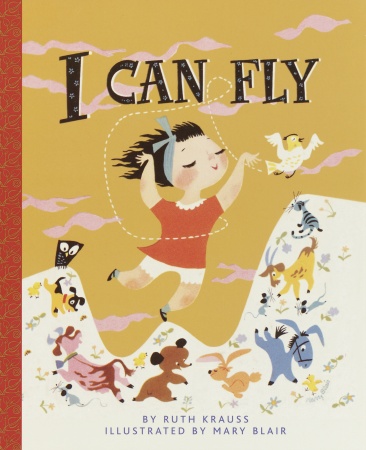
Aaron explained how during World War II Disney was put in a position, like most companies, to need women artists, which is how one of his creative idols was given some creative power. Here is a story on Mouseplanet about how women came to work at Disney. "Mary Blair was an art supervisor and designer at Disney when they were at their highest level of brilliancy. Disney optioned to use her artwork for storybooks versions of certain films in place of stills, said Lea. "Blair's influence can still be found today (she inspires a lot of us creative types). The opening credits for Monsters, Inc. is definitely an homage to her, as well as Foster's Home for Imaginary Friends," Lea pointed out. To illustrate Blair's influence Lea shares a sample of Blair's work and a sample of his own. I Can Fly illustration Mary Blair.
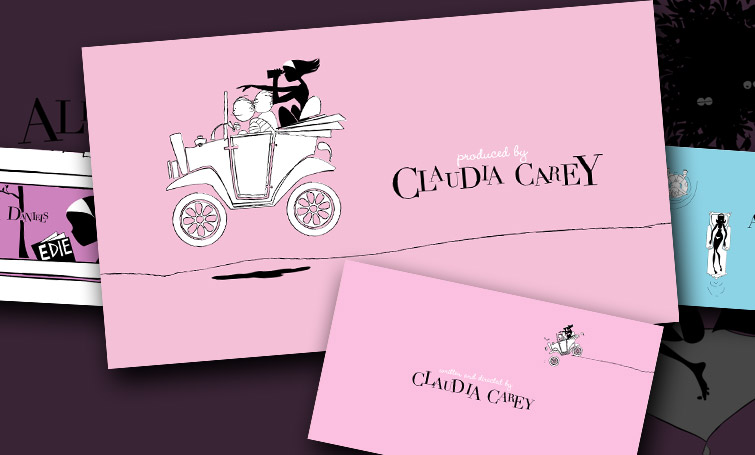
Claudia Carey illustration Aaron Lea.
There is an article In New York Entertainment examining whether things are that much different at Disney in 2008 than they were in 1938. "The IMDb credits for Disney's latest No. 1 movie, Ratatouille, list 26 separate animators — of whom exactly zero appear based on first names to be women," they cite. To check the fact, here is a link to the entire credits. Two female story participants were given the glorious titles of "additional story material," indicative of their involvement.
Over a rainy weekend my daughter and I rented Enchanted. Disney's newest version of it's own princess tales. Tune in tomorrow for analysis of Disney's new generation of Princess film.
Donate money to the GDIGM so they can wine, dine and educate the film makers who do influence our daughters.
GDIGM is running a contest for girls. They invite all girls/women 13-26 to make a Video Ad citing the organizations research points. Someone has to win - why not your daughter? Go to the < site to learn more.
For more about how exactly Disney Princess Culture really is anti-girl read on:
Over a rainy weekend my daughter and I rented Enchanted. Disney's newest version of it's own princess tales. Tune in tomorrow for analysis of Disney's new generation of Princess film. Image of Mary Ford's Disney rejection letter.
Ainsley performed in her annual Christmas Pageant. This year they took the show on the road and sang and danced and played instruments at a nursing home.
This is her first dance solo.
We baked cookies for Santa. I don't know where she gets that attitude.
Barbie upstaged the guitar. Body image was balanced out by juxtaposing Hispanic dark-haired Gabriella of High School Musical with larger than life Tracy Turnblad of Hairspray.
Crush was accounted for with Zac Afron as Troy of High School Musical. Zac does pair with both of them in the respective movies.
Zack and Ainsley got a kitchen - previously owned by The Joneses.
We're keeping it in Zack's room because he has more available space.
Someone handed my daughter a religious tract with $20 in it.
I took her to Walmart and she chose the Hairspray DVD.
This, this is what I want.
Hairspray? Okay. $20 is a lot for a DVD, are you sure you don't want to wait till I find it at a garage sale?
No. I want it now. You know why? It has my favorite in it.
I'm hoping she just loves Tracy Turnblad.
Zac Efron, he's my favorite. I just love him.
There is a part of me that is just surprisingly Puritan which wants to shout, But, you're only 6 - what do you know of crushes? You shouldn't feel this way yet! You're not ready! Put that movie back! You'll never see another movie again!
Except that I am still hopelessly devoted to John Travolta, which dates back to me watching Grease when I was her age. The love is unchanged. My cousin shared my attraction to him and playing John and Sandy was our favorite game. We wanted to BE Olivia Newton-John. I listened to the Grease album over and over. I bought it on tape and CD.
My love transended Grease and progressed to all things John and Olivia. Olivia's albums including the old 70's folk music, the 80's pop Let's Get Physical album, and Xanadu. Let's not forget their encore movie together, Two Of A Kind. Then John's work Saturday Night Fever and Staying Alive - ooh la la. Urban Cowboy, American Gigolo and Pulp Fiction. I even watched those stupid 80s films with Kirsty Alley and the talking babies. I loved him, even when no one else did.
I passed my love on to my younger sister and she flew in for an Olivia concert in the 90s. When they remade and rereleased Grease we paid full price. I have the video. My husband got me an Olivia t-shirt for Christmas a few years back - I specifically asked for it.
My dancing shoes, which eventually met a tragic end, were based on the shoes Olivia Newton-John wore in the last scene of the movie. I haven't replaced them because I haven't found a pair exactly alike. I probably smoked for 20 years because of that last scene. And only this Saturday night I looked in the mirror and realized I was wearing something disturbingly similar to Sandy's bad-girl-sexy-outfit and I had to force myself to change.
Evidently, it's genetic. I recently learned my crush was shared by my 84-year-old grandmother.
I want to see Hairspray with you, I have always liked that John Travolta, she told me.
I had a crush on John Travolta when I was your age, I shared with Ainsley.
I won the baby lottery in that I was blessed with one girl and one boy.
I felt it would be easy enough to combat the nature versus nurture gender influence on my babies. What I didn't count on was the immediacy of the nurture genderization that was beyond my control.
I also had the unique perspective of having same-age, opposite-gender cousins to compare treatment in the present sense. More simply: My daughter has a male cousin born 3 weeks after her and my son has a female cousin born 3 weeks after him. Without picking on my mother-in-law, whose influence on my children I consider positive and invaluable, her behavior toward my children is the most marked in its gender-stereotyping so I'll use her to illustrate.
Within days of the birth of my son and his female cousin she could not stop talking about how "all boy" my baby was, as compared to how "all girl" his cousin was. My son, in my opinion, was a pretty as any girl baby. I really believe if we took them to the mall with Zack in a dress and called him Samantha everyone would believe he was a girl and therefore treat him accordingly. She believes he is somehow inherently boy-like.
Babies, whether they are girls or boys, eat, sleep, poop, pee and cry. That's it. There really are no scientific gender characteristics aside from genitalia. Yet, the way they are treated from the very second they pop out of the womb is vastly different.
What I realized is that it's a mute argument because you can't insulate them from gender-stereotyping. Not even for the first five minutes.
Have you ever been in a store with a new mother and someone says, "What a cute little boy."
One mother I was with said, I have her dressed from head to toe in pink, the blanket is pink and the headband is pink and has a bow. How much more obvious can it be that she's a girl?
Mothers feel it's imperative that even strangers understand that their baby boys are boys and their girls are girls.
With my girl the clothes available were pink, ruffled, bearing photos of dolls, teddy bears, bows, and dance emblems. The clothing very often bore some comment on her attractiveness like cute, adorable, sweet.
I think my son wears something with a ball, bat, net or truck picture every single day.
My boy scored some blocks, trucks, puzzles, tools and a video game system for his first birthday. My daughter got some dolls, a stroller, cooking paraphernalia, fake heels and a tea set for hers.
Adjectives used to describe my infant daughter included pretty, sweet, adorable and precious.
Adjectives used to describe my son include tough, big, smart, strong and cute.
What I realized is that you can't stop people from treating your children in different ways due to their gender. Not in reality.
In the real world it's ungrateful and rude to tell people not to buy your daughter girl toys. You sound like an ass if you say please don't call her beautiful, call her smart. You really have little control over what friends and family say to your kids. You can't go around policing every toy, clothing item or word. There's also an argument that you don't really want to criminalize girl toys or positive feedback about girlness. The goal is not to make them boys after all.
My husband and I are as guilty of gender-stereotyping our babies as anyone. My first instinct with my daughter is always to tell her to be nice and get along. It's not nice to hit.
Yet my son is encouraged by the whole family to flex his muscles and be physically aggressive and growl. My husband likes to show his aggressiveness off to his friends, Get him Zack!
I even gave him a very aggressive masculine hair cut with his spiked Mohawk, while my daughter isn't allowed to cut her hair short.
While I've given up the idea that it's remotely possible to insulate our kids from early gender-stereotyping, I think it's important to be conscientious about applying "masculine" adjectives to our daughters too. It's important that we make a habit of telling our daughters that they too are smart, competent, strong, fast, brave and tough. It's important to expose them to the "masculine toys" like video games, puzzles, math games and the computer.
For that matter, it's pretty funny to watch Zack run around in my red peep-toe pumps and play house with the baby dolls. Sweet and gentle are adjectives I like to use with him.
One of the babies in the picture is a boy. One is a girl. Which is which? What makes you think so? Look to the sidebar to participate in a baby-gender poll.
The most interesting thing about Nicole Richie and Paris Hilton, to me, is that they look the same. Same hair, same skin tone, same fashion. Just very much the same. One of them is half-African American, but which one? Obviously, you know which one because you hear about them constantly, but if you didn't it would be hard to tell.
It's interesting that women all want to be the same color, only not the color we are.
Dark skinned women buy bleaching products to lighten the color of their skin to be more beautiful. While white women poison their skin with sun damage and tanning beds to look darker to be more beautiful. (I'm really regretting the tanning, now that I'm fighting melasma with bleaching products so I have one skin tone.)
Does this mean that Hispanic women, who presumably have the ideal medium brown skin tone, feel most beautiful? Or do they have skin-tone issues too?
I like the Olay tag line, Love the skin you're in.
Completely violating my goal to say no to good things as I vowed to do in my column Priorities, I am the new coach of Ainsley's soccer team.
Perhaps you recall my protest last fall when my five-year-old daughter, Ainsley's, soccer coach informed me that her team was being named The Bratz. If you missed it, you should check out Go Bratz Go! where I reported how I was the only parent against naming a little girls' soccer team after vapid dolls that dress like hookers. I convinced the parents to change the name to Butterflies.
The soccer commissioners refused to be flexible about their deadline and wouldn't allow the name change. After a lot of consideration in, No Bratz No! Tantrum or Go With The Flow?, she played on the team. She was wearing an unempowering uniform which declared her a brat in bold black letters.
Playing sports is a huge confidence builder and seriously empowering for girls. Girls must have exercise, let's not forget the BMI Red Zone. Soccer beats cheerleading, in my opinion, as I said in Give Me an "A". I didn't see how anything empowering would be accomplished by yanking her off the soccer team in protest of the name. I certainly didn't want the message to be - if you don't get your way, pick up your toys and go home.
My protest, I do think, made some people think about the issue of what kind of influences their expose their daughters are exposed to. So, it wasn't a complete waste.
This season they needed a coach. I volunteered because I, as the coach, get to name the team. I also think it's important to be involved in my kids' education, activities and sports.
We'll be making a fashion statement in black shirts with pink script, pink shorts and pink socks (hopefully). I know penguins are black and white, but I didn't want to try to keep white clean.
One way to empower yourself and your family is to meet the neighbors. The theory behind National Night Out is that if your neighbors know you, they pay attention to who is coming and going from your house. You're less likely to be a victim of a crime if your neighbors are involved. The hope is that they'll say, Hey, that looks a little sketchy, and call the police should someone break in.
I remember having the run of the neighborhood when I was a kid. America was either safer then, or we just weren't aware that so many of our neighbors were terrible human beings not worth knowing.
I don't live in the best neighborhood in town. I know only one of my neighbors and he's a little off, given to random fits of screaming. I feel slightly guilty for judging these people, my neighbors, who are probably a mix of naughty and nice, without even knowing who they are.
Today I noticed lots of National Night Out signs in prosperous neighborhoods. Surely, if I lived in one of those neighborhoods I'd be more inclined to know my neighbors right?
It begs the question: Is it more empowering to acknowledge your neighbors if they are a little shady or vanish inside the house and group everyone in the whole neighborhood as "a stranger" for the benefit of empowering a daughter? According to the National Sex Offender Registry there are quite a few convicted sex offenders in my neighborhood and that doesn't make me want to run right out with a batch of cookies.
NATIONAL NIGHT OUT is designed to: * Heighten crime and drug prevention awareness; * Generate support for, and participation in, local anticrime programs; * Strengthen neighborhood spirit and police-community partnerships; and * Send a message to criminals letting them know that neighborhoods are organized and fighting back.
I saw one sign in my neighborhood a few blocks down. The lawn was mowed and the house kept up. Perhaps I'll stop by for some punch and cookies just so I can say I'm a part of the solution rather than part of the problem. Perhaps you should too.
We have the power to - not just passively ban negative media, which we should definitely do - But we have the power to CREATE positive media for our daughters about girls.
I can tell you this - my daughter thinks it's pretty cool that she's the Poster Girl for Empowering Girls: So Sioux Me. This is one of the reasons I'm inviting you to send photos of your daughter to be included as a Poster Girl on this site. It is one way to take media from outside of our world to a creative and positive medium that includes them.
I created a children's book for my daughter's 5th birthday titled Ainsley, Perfect You.I am practically begging you to STEAL this idea for Christmas (or birthdays).
We read this book before the First Day of School, whenever Ainsley makes negative comments about her self, whenever she feels insecure or whenever she wants. It's a special book that sits out on a shelf and we must wash our hands before reading it.
In the book I addressed issues of beauty, because Ainsley seemed preoccupied with what it was and exactly what criteria people were using to make the judgement about who was beautiful. I addressed school, education, intelligence and learning. I addressed self-worth and a feeling of wholeness and "enoughness." I addressed the meaning of God and her role as a Child of God. I addressed risk-taking and trying new things.
Your family may prize different characteristics or place different values as a priority. What's important, is that you can use this tool to teach her who she is, but also influence, mold and raise or define the bar of expectation for who she will become.
A-N-Y-O-N-E can do this if they have a computer, a camera, $30 and an imagination. You may be thinking you're short on imagination so, while Ainsley, Perfect You is copyrighted I give you permission to steal ideas, concepts, words, etc. Your daughter is every bit as cool as mine, but she may have different attributes and characteristics.
I encourage you to use my book for ideas, but personalize them for your daughter(s). (Of course, its good for your daughter, but don't forget your sons.)
I used www.MyPublisher.com because they were the only company who had a "storybook" feature at the time. Turns out my parents and grandparents were also interested in having a copy of this book (one project many gifts!) and My Publisher has coupons they'll send you frequently. Flickr now offers the feature, and Snapfish and probably all the other ones too.
There are 20 pages so I'll run Ainsley, Perfect You as a series, starting with this foreword. I had to scan the pages, so please forgive the quality.
One particular exhibit had a disconcerting effect on me for days.
You sit in between two mirrors and look at your self.
One is a regular mirror and show's you how you see yourself every day. The top photo is how I see myself.
The other shows you what other people see every day. It shows you what you really look like.
Do you see a minute difference between the top photo and the bottom photo?
I've been fascinated by my own emotional reaction. Truly, it was unsettling to see my reflection differently than I do everyday.
The top photo, what I see in the mirror is more attractive to me.
My eyes are uneven in the second photo. The right eye, when looking at it, is slightly lower than the left one.
I find I hold my head slightly tilted in a way that makes my features more even. I think I also hold that eyebrow higher to make the eyes look more symmetrical. I compensate for the flaw I've really only noticed once in a photo when I was pregnant with Zack.
Since you are other people and it's not your face I really have no clue how you are perceiving the attractiveness of the two photos or whether you see the unevenness of my eyes at all. For all I know, everyone who sees me, may choose to make the same correction that I do for myself.
It strikes me as a kindness to myself that my subconscious mind chooses to correct my minor flaw so that I not only feel more attractive, but literally see myself as more attractive.
It also strikes me that people who suffer from eating disorders, like anorexia and bulimia or the emotional disorder of body dysmorphia for some reason they aren't subconsciously fixing their features in their minds.
They are not only seeing their minor flaw - they are focusing on it and magnifying it.
Its also likely they are expecting the outside world, other people, to treat them the way they treat themselves. Did you see how I assumed that others would treat me with the same kindness as I show myself and that others would correct or overlook the minor flaw in their own perceptions, rather than focus on it and magnify it? This assumption is likely a result of my habit of doing such a kindness for myself and for others.
Were I unkind to myself, and if I made a habit of focusing on the minor flaws of other people, I would likely assume that others were also doing so to me.
That's my theory anyway, based on everything I've read about self-esteem, self-worth, and eating disorders and related emotional disorders.
It follows then that maybe we can teach our daughters to serve their own mental health and self-esteem.
Cutting ourselves, our daughters and others some slack for our minor physical flaws teaches, by example, our daughters this emotional skill vital to their self-preservation.
Treating ourselves, our daughters, and others - especially other girls and women - with kindness is also a teachable habit.
Self-love and self-acceptance is a skill. One we learn and one we can teach.
Kathleen Deveny has a great article in Newsweek titled In Praise of Bossy Girls, about how we hear girls, but never boys, called Bossy when they take charge.
We ask girls to walk a fine line between being strong and being likable. It's a line we typically allow boys to trample.
What's next?
Well, you KNOW what's next, because it's either happened to you or you've used all your powers of "nice" to avoid it.
As little girls they call us bossy. As women they call us BITCHY.
Praise your bossy daughter today! She's showing signs of being a leader.
You better be positive he's a prince before you marry him, Ainsley. I can't tell you how many women I know who married a toad and found out he was incapable of being anything other than a toad.
(If you're not very careful you can marry a toad and he'll turn into an ass.)
I'll save this sage bit of wisdom for when I'm allowed to say "ass" in her presence.
Disney's princess tales all attempt to answer one question: What do girls/women want? According to Disney's traditional message to little girls, what women want is to be saved by a prince, fall instantly in love and live happily ever after.
As a woman, and a parent, I've been waiting for Disney to come into the new millennium with a more up-to-date, girl-friendly, version of it's own princess drama. Shrek was great, but it lacked the Disney Magic that makes little girls drool.
Enchanted does question the Disney Princess Culture, kinda. Sorta. Maybe.
The evil stepmother still finds the princess threatening and attempts to do away with her by sending her to New York City "where dreams never come true."
The Princess Giselle, meets a single father, about to become engaged to the exact opposite of a Disney Princess archetype, Nancy. Nancy is a professional single woman, who acknowledges that she's never had much use for Prince Charming, but she is holding out for a decent guy. She's accused of being a secret hopeless romantic underneath her practical exterior by a coworker. The accusation proves true when she gets exhilarated by an uncharacteristic invitation to a ball and nearly swoons over a gift of real flowers instead of the usual e-card.
Our single father, Robert, is a divorce lawyer, who was left by the mother of his child, a daughter for whom, he buys books like Great Women in History instead of the princess book she really wants. Disney pokes a little fun at parents, like myself, who take issue with the Princess Save Me Culture and wish to present our daughters with a more realistic expectation for their futures. They highlight Madam Curie and point out that she died of radiation poisoning - which isn't as much fun or as magical a story as living happily ever after. Touche' Disney. My daughter wholeheartedly agrees. But, is it really more romantic to give up your voice to get a man? Or to fall in love with and change your kidnapper?
"Oh, you can try to withhold Princess Culture all you like," Disney seems to challenge, as they have the six-year-old girl jump out of a taxi and chase down our Princes Giselle as she mistakenly tries to enter a billboard in the shape of a castle. She falls right into the arms of our unprincely hero, Robert. He, of course, agrees to help her, but not to save her, much too his daughter's chagrin. Very much like the disappointment I'm sure my own daughter feels when I tell her to pick a movie other than Cinderella or Sleeping Beauty at the video store.
Princess Giselle behaves as a caricature of her own princess self. Basically, she is full of larger than life false hand movements and emotional twittering and says unbelievably ridiculous things about being saved and the power of true love's kiss. She's incapable of any emotion aside from happiness and joy and goodness. She's naive to the point of being deranged. To its credit Disney dares to poke as much fun as it's own history and creation of the idiotic lunacy of Princess Culture as it pokes at me for being less than charmed by it.
A shift in Princes Giselle occurs when she and her non-prince savior, Robert, set against the backdrop of street theater in Central Park, begin to discuss dating versus falling-in-love-at-first-sight and what happens after happily ever after. Seems our Princess was previously unaware that she might have job after marriage and that might be part of what makes her happy. Or that she might express her thoughts, dreams and desires to her love-at-first sight Prince fiance should he show up to save her.
For his part our non-princess-saving man realizes that it certainly won't kill him to offer up a little romance to show his practical modern-day woman Nancy that he loves her. (No, I think, it certainly won't kill you to go to a little effort. Maybe I'll send this particular YouTube Video to my own modern-day practical man. Hint, hint.)
Giselle experiences anger for the first time when Robert confronts her with the reality that her Prince probably isn't coming and it's time for Plan B. Plan B, in Princess Culture lingo is, I believe, a job or a sense of purpose. Our naive Princess Giselle is seen flipping through Great Women of History with a new interest.
Of course, this is a Disney film so our Prince, like many Princes of Romance Past, does arrive to save our Princess. And our Prince, like many Princes of Romance Past is a completely self-absorbed dope. Cute, but lacking substance. (Who doesn't remember that guy? Luckily, ladies, we skirted that future - by going on a date - before it was too late.)
In light of her own personal awakening our Princess Giselle demands a date before they return to never, never land where she realizes maybe her love-at-first-sight Prince and she don't really have all that much in common. Maybe, she's making a terrible mistake? Maybe she loves the man who doesn't want to save her, but who took the time to ask her what she wanted to be when she grows up? Maybe?
The film takes a detour worth looking at. Giselle decides she needs a ball gown and our six-year-old girl snags Daddy's emergency credit card, with a quip about this being an emergency and the two are seen jaunting around New York on a spending spree. The little girl precociously fills our naive princess in on today's beauty culture. It seems Disney might be juxtaposing the innocence of their own interpretation of girlness with the current hyper-sexualized, appearance-oriented one. Perhaps they are asking, "how is this better?" The answer: "It's not."
Like Disney Princess Films of generations past we end up at . . . A Ball. Where else?
The evil queen comes to do away with our princess to prevent her from taking over her kingdom and Giselle takes a bite of her poisoned apple (Oh, Eve, will you ever learn?).
Of course she's not awakened to our simple-minded self-absorbed pretty boy Prince. She is awakened to our single father divorce lawyer Prince. His date Nancy, who he intended to marry 5 minutes ago, gives him permission to kiss Giselle and she does awaken with the words, "I knew it was you." They make a new modern-day family, the father, nice step-mother and daughter (who got a world full of romance and princessness making her deliriously happy).
Giselle, in a modern-day twist, saves her True Love. Thanks Disney, I've been waiting a long time for that. That is some gender progress.
Which leaves our professional Nancy who realizes she does want to be saved after all and jumps down the rabbit hole/manhole with Prince Charming and Lives Happily Ever After in Andalasia.
In light of yesterday's So Sioux Me story, Princess Culture Examined I had to wonder. Who's interpretation of what women want is this? To answer that I watched the special features on how the magic was made and listened to the interviews with the director, writers, choreographers, sound people, production people etc. I went to the IBMD database and checked the credits of the entire cast and crew.
It was written by a man, directed by a man and produced by men.
Out of 9 listed producers only one, Jill Morris, is a woman. The music is by a man, as is the cinematography, film editing, art direction, production design and special effects. Out of five, two women are given credit for production management. Costume design was done by a woman and one of the two casting credits goes to a woman.
Disney's new updated version of "what women want" is really "men's new interpretation of what women want."
I just have a few questions for Disney: Why is it that you think women aren't capable of telling our own story in your magical universe? Don't you think women might be better witnesses about our own experience and desires than men?
I would love to see the FEMALE interpretation of what women want. I want to see Jane! interpreted by JANE.
Disney, aren't you at all curious to see if you're right?
Send a letter to Disney, TWDC.Corp.Communications@disney.com, telling them you want more healthy girl images out of their company, which begins with more female involvement in the creative process.
Apply for a job. If you are creative and have skills in writing, producing, animation or editing and think you can breath some 3 dimensional empowering life into the girl characters of Disney - apply for a job.
If your daughter has talents and interests in animation or film, encourage that. Don't let anyone tell her it's too competitive or it's a male-dominated industry. Tell her she can do it, enroll her in classes, provide the equipment she needs to learn the skills. Tell her we NEED her to do it.
Ever wonder how and why the Disney Princess Culture distorted and minimized girlness, leaving girls as the extra character or one that desperately needs to be saved?
My film-maker friend, Aaron Lea, sent me this rejection letter to a Mary V. Ford from Disney dated 1938. It states that she should not bother sending her portfolio because the creative talent is, by company policy, men.
Which does help explain how the Disney Princess Girl Culture became so distructive and minimizing to girls.
Dear Miss Ford:
. . . .
Women do not do any of the creative work in connection with preparing the cartoons for the screen, as that work is performed entirely by young men. For this reason girls are not considered for the training school.
The only work open to women consists of tracing the characters on clear celluloid sheets with India ink and filling in the tracings on the reverse side with pain according to directions.
In order to apply for a position as "Inker" or "Painter" it is necessary that one appear at the Studio, bringing samples of pen and in and water color work. It would not be advisable to come to Hollywood with the above specifically in view, as there really are very few opeinings in comparison with the number of girls who apply.
Yours very truly,
Walt Disney Productions, LTD.
Aaron explained how during World War II Disney was put in a position, like most companies, to need women artists, which is how one of his creative idols was given some creative power. Here is a story on Mouseplanet about how women came to work at Disney. "Mary Blair was an art supervisor and designer at Disney when they were at their highest level of brilliancy. Disney optioned to use her artwork for storybooks versions of certain films in place of stills, said Lea. "Blair's influence can still be found today (she inspires a lot of us creative types). The opening credits for Monsters, Inc. is definitely an homage to her, as well as Foster's Home for Imaginary Friends," Lea pointed out. To illustrate Blair's influence Lea shares a sample of Blair's work and a sample of his own. I Can Fly illustration Mary Blair.
Claudia Carey illustration Aaron Lea.
There is an article In New York Entertainment examining whether things are that much different at Disney in 2008 than they were in 1938. "The IMDb credits for Disney's latest No. 1 movie, Ratatouille, list 26 separate animators — of whom exactly zero appear based on first names to be women," they cite. To check the fact, here is a link to the entire credits. Two female story participants were given the glorious titles of "additional story material," indicative of their involvement.
Over a rainy weekend my daughter and I rented Enchanted. Disney's newest version of it's own princess tales. Tune in tomorrow for analysis of Disney's new generation of Princess film.
Donate money to the GDIGM so they can wine, dine and educate the film makers who do influence our daughters.
GDIGM is running a contest for girls. They invite all girls/women 13-26 to make a Video Ad citing the organizations research points. Someone has to win - why not your daughter? Go to the < site to learn more.
For more about how exactly Disney Princess Culture really is anti-girl read on:
Over a rainy weekend my daughter and I rented Enchanted. Disney's newest version of it's own princess tales. Tune in tomorrow for analysis of Disney's new generation of Princess film. Image of Mary Ford's Disney rejection letter.
Ainsley performed in her annual Christmas Pageant. This year they took the show on the road and sang and danced and played instruments at a nursing home.
This is her first dance solo.
We baked cookies for Santa. I don't know where she gets that attitude.
Barbie upstaged the guitar. Body image was balanced out by juxtaposing Hispanic dark-haired Gabriella of High School Musical with larger than life Tracy Turnblad of Hairspray.
Crush was accounted for with Zac Afron as Troy of High School Musical. Zac does pair with both of them in the respective movies.
Zack and Ainsley got a kitchen - previously owned by The Joneses.
We're keeping it in Zack's room because he has more available space.
Someone handed my daughter a religious tract with $20 in it.
I took her to Walmart and she chose the Hairspray DVD.
This, this is what I want.
Hairspray? Okay. $20 is a lot for a DVD, are you sure you don't want to wait till I find it at a garage sale?
No. I want it now. You know why? It has my favorite in it.
I'm hoping she just loves Tracy Turnblad.
Zac Efron, he's my favorite. I just love him.
There is a part of me that is just surprisingly Puritan which wants to shout, But, you're only 6 - what do you know of crushes? You shouldn't feel this way yet! You're not ready! Put that movie back! You'll never see another movie again!
Except that I am still hopelessly devoted to John Travolta, which dates back to me watching Grease when I was her age. The love is unchanged. My cousin shared my attraction to him and playing John and Sandy was our favorite game. We wanted to BE Olivia Newton-John. I listened to the Grease album over and over. I bought it on tape and CD.
My love transended Grease and progressed to all things John and Olivia. Olivia's albums including the old 70's folk music, the 80's pop Let's Get Physical album, and Xanadu. Let's not forget their encore movie together, Two Of A Kind. Then John's work Saturday Night Fever and Staying Alive - ooh la la. Urban Cowboy, American Gigolo and Pulp Fiction. I even watched those stupid 80s films with Kirsty Alley and the talking babies. I loved him, even when no one else did.
I passed my love on to my younger sister and she flew in for an Olivia concert in the 90s. When they remade and rereleased Grease we paid full price. I have the video. My husband got me an Olivia t-shirt for Christmas a few years back - I specifically asked for it.
My dancing shoes, which eventually met a tragic end, were based on the shoes Olivia Newton-John wore in the last scene of the movie. I haven't replaced them because I haven't found a pair exactly alike. I probably smoked for 20 years because of that last scene. And only this Saturday night I looked in the mirror and realized I was wearing something disturbingly similar to Sandy's bad-girl-sexy-outfit and I had to force myself to change.
Evidently, it's genetic. I recently learned my crush was shared by my 84-year-old grandmother.
I want to see Hairspray with you, I have always liked that John Travolta, she told me.
I had a crush on John Travolta when I was your age, I shared with Ainsley.
I won the baby lottery in that I was blessed with one girl and one boy.
I felt it would be easy enough to combat the nature versus nurture gender influence on my babies. What I didn't count on was the immediacy of the nurture genderization that was beyond my control.
I also had the unique perspective of having same-age, opposite-gender cousins to compare treatment in the present sense. More simply: My daughter has a male cousin born 3 weeks after her and my son has a female cousin born 3 weeks after him. Without picking on my mother-in-law, whose influence on my children I consider positive and invaluable, her behavior toward my children is the most marked in its gender-stereotyping so I'll use her to illustrate.
Within days of the birth of my son and his female cousin she could not stop talking about how "all boy" my baby was, as compared to how "all girl" his cousin was. My son, in my opinion, was a pretty as any girl baby. I really believe if we took them to the mall with Zack in a dress and called him Samantha everyone would believe he was a girl and therefore treat him accordingly. She believes he is somehow inherently boy-like.
Babies, whether they are girls or boys, eat, sleep, poop, pee and cry. That's it. There really are no scientific gender characteristics aside from genitalia. Yet, the way they are treated from the very second they pop out of the womb is vastly different.
What I realized is that it's a mute argument because you can't insulate them from gender-stereotyping. Not even for the first five minutes.
Have you ever been in a store with a new mother and someone says, "What a cute little boy."
One mother I was with said, I have her dressed from head to toe in pink, the blanket is pink and the headband is pink and has a bow. How much more obvious can it be that she's a girl?
Mothers feel it's imperative that even strangers understand that their baby boys are boys and their girls are girls.
With my girl the clothes available were pink, ruffled, bearing photos of dolls, teddy bears, bows, and dance emblems. The clothing very often bore some comment on her attractiveness like cute, adorable, sweet.
I think my son wears something with a ball, bat, net or truck picture every single day.
My boy scored some blocks, trucks, puzzles, tools and a video game system for his first birthday. My daughter got some dolls, a stroller, cooking paraphernalia, fake heels and a tea set for hers.
Adjectives used to describe my infant daughter included pretty, sweet, adorable and precious.
Adjectives used to describe my son include tough, big, smart, strong and cute.
What I realized is that you can't stop people from treating your children in different ways due to their gender. Not in reality.
In the real world it's ungrateful and rude to tell people not to buy your daughter girl toys. You sound like an ass if you say please don't call her beautiful, call her smart. You really have little control over what friends and family say to your kids. You can't go around policing every toy, clothing item or word. There's also an argument that you don't really want to criminalize girl toys or positive feedback about girlness. The goal is not to make them boys after all.
My husband and I are as guilty of gender-stereotyping our babies as anyone. My first instinct with my daughter is always to tell her to be nice and get along. It's not nice to hit.
Yet my son is encouraged by the whole family to flex his muscles and be physically aggressive and growl. My husband likes to show his aggressiveness off to his friends, Get him Zack!
I even gave him a very aggressive masculine hair cut with his spiked Mohawk, while my daughter isn't allowed to cut her hair short.
While I've given up the idea that it's remotely possible to insulate our kids from early gender-stereotyping, I think it's important to be conscientious about applying "masculine" adjectives to our daughters too. It's important that we make a habit of telling our daughters that they too are smart, competent, strong, fast, brave and tough. It's important to expose them to the "masculine toys" like video games, puzzles, math games and the computer.
For that matter, it's pretty funny to watch Zack run around in my red peep-toe pumps and play house with the baby dolls. Sweet and gentle are adjectives I like to use with him.
One of the babies in the picture is a boy. One is a girl. Which is which? What makes you think so? Look to the sidebar to participate in a baby-gender poll.
The most interesting thing about Nicole Richie and Paris Hilton, to me, is that they look the same. Same hair, same skin tone, same fashion. Just very much the same. One of them is half-African American, but which one? Obviously, you know which one because you hear about them constantly, but if you didn't it would be hard to tell.
It's interesting that women all want to be the same color, only not the color we are.
Dark skinned women buy bleaching products to lighten the color of their skin to be more beautiful. While white women poison their skin with sun damage and tanning beds to look darker to be more beautiful. (I'm really regretting the tanning, now that I'm fighting melasma with bleaching products so I have one skin tone.)
Does this mean that Hispanic women, who presumably have the ideal medium brown skin tone, feel most beautiful? Or do they have skin-tone issues too?
I like the Olay tag line, Love the skin you're in.
Completely violating my goal to say no to good things as I vowed to do in my column Priorities, I am the new coach of Ainsley's soccer team.
Perhaps you recall my protest last fall when my five-year-old daughter, Ainsley's, soccer coach informed me that her team was being named The Bratz. If you missed it, you should check out Go Bratz Go! where I reported how I was the only parent against naming a little girls' soccer team after vapid dolls that dress like hookers. I convinced the parents to change the name to Butterflies.
The soccer commissioners refused to be flexible about their deadline and wouldn't allow the name change. After a lot of consideration in, No Bratz No! Tantrum or Go With The Flow?, she played on the team. She was wearing an unempowering uniform which declared her a brat in bold black letters.
Playing sports is a huge confidence builder and seriously empowering for girls. Girls must have exercise, let's not forget the BMI Red Zone. Soccer beats cheerleading, in my opinion, as I said in Give Me an "A". I didn't see how anything empowering would be accomplished by yanking her off the soccer team in protest of the name. I certainly didn't want the message to be - if you don't get your way, pick up your toys and go home.
My protest, I do think, made some people think about the issue of what kind of influences their expose their daughters are exposed to. So, it wasn't a complete waste.
This season they needed a coach. I volunteered because I, as the coach, get to name the team. I also think it's important to be involved in my kids' education, activities and sports.
We'll be making a fashion statement in black shirts with pink script, pink shorts and pink socks (hopefully). I know penguins are black and white, but I didn't want to try to keep white clean.
One way to empower yourself and your family is to meet the neighbors. The theory behind National Night Out is that if your neighbors know you, they pay attention to who is coming and going from your house. You're less likely to be a victim of a crime if your neighbors are involved. The hope is that they'll say, Hey, that looks a little sketchy, and call the police should someone break in.
I remember having the run of the neighborhood when I was a kid. America was either safer then, or we just weren't aware that so many of our neighbors were terrible human beings not worth knowing.
I don't live in the best neighborhood in town. I know only one of my neighbors and he's a little off, given to random fits of screaming. I feel slightly guilty for judging these people, my neighbors, who are probably a mix of naughty and nice, without even knowing who they are.
Today I noticed lots of National Night Out signs in prosperous neighborhoods. Surely, if I lived in one of those neighborhoods I'd be more inclined to know my neighbors right?
It begs the question: Is it more empowering to acknowledge your neighbors if they are a little shady or vanish inside the house and group everyone in the whole neighborhood as "a stranger" for the benefit of empowering a daughter? According to the National Sex Offender Registry there are quite a few convicted sex offenders in my neighborhood and that doesn't make me want to run right out with a batch of cookies.
NATIONAL NIGHT OUT is designed to: * Heighten crime and drug prevention awareness; * Generate support for, and participation in, local anticrime programs; * Strengthen neighborhood spirit and police-community partnerships; and * Send a message to criminals letting them know that neighborhoods are organized and fighting back.
I saw one sign in my neighborhood a few blocks down. The lawn was mowed and the house kept up. Perhaps I'll stop by for some punch and cookies just so I can say I'm a part of the solution rather than part of the problem. Perhaps you should too.
I’m Tracee Sioux, Creator of The Year of YES! coaching program, best-selling author of The Year of YES! memoir and host of Year of YES! Radio on True2YouRadio.com.
I teach people how to get what they want.
In 2013 I did a life experiment.
What if I did everything my Soul told me to do? Where would she take me? What would my life look like?
My one year experiment, The Year of YES!, began. I went from making $600 a month to clearing six-figures in a 12 month period. I built a meaningful, sustainable, profitable and scalable business. I made Time my Lover and Rest and Play became my new Prayer. I created an incredible circle of friends, business partners and a spiritual community. I banished 40 years of psychic garbage and cast it into the fire. I baptized myself in the womb of Mother Earth.
My life was blessed with a multitude of beautiful things and now, my purpose is to teach others, like you, how to live this way. Do you want these gifts?
More Money
Meaningful Work
Pleasure Drenching
Great Love
Time Sex
When we align with our Soul’s purpose, the Universe makes sweet love to us.
A mother who radiates self-love and self-acceptance vaccinates her daughter against low self-esteem. Naomi Wolf
Author Contact
traceesioux@yahoo.com. Email me for to Review Products for girls to Advertise on Empowering Girls: So Sioux Me to write Freelance Articles if you need a Guest Blogger


 Kathleen Deveny has a great article in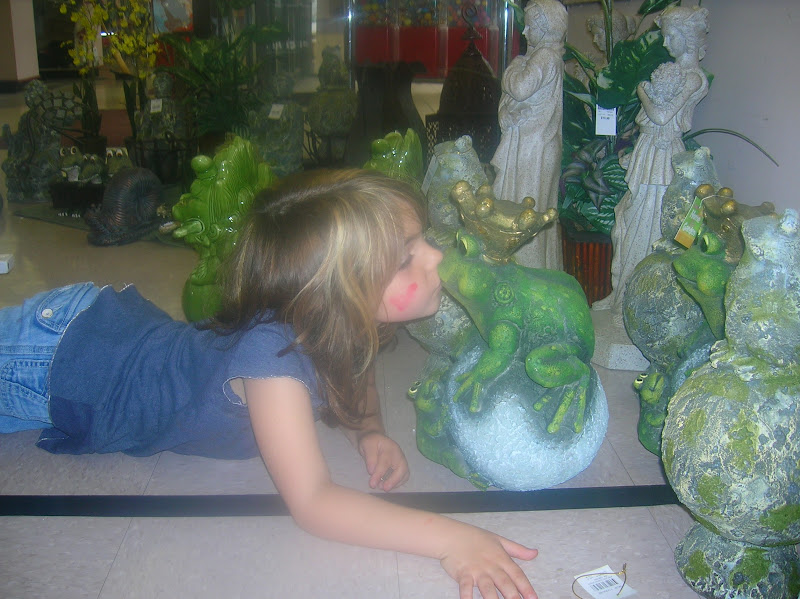
 I Can Fly illustration Mary Blair.
  Claudia Carey illustration Aaron Lea.